In October 2019, I once again visited our friends in Slingerlands, NY. On earlier visits I often thought, funny that there also exists a Slingerlands in the US. Slingeland is an integrated part of the town where I live, Molenlanden, The Netherlands, just a few kilometers from my home, and locally still known under its centuries old name (no r, no s, but in old documents spelling is not always consistent). With my friends visiting The Netherlands we were once facing the portrait of a most honorable and impressive Govert van Slingelandt, influential magistrate, in the nearby city museum of Dordrecht, in the 16th century the leading city of Holland. I finally decided to investigate a possible connection between the two Slingerlands, Slingerlands NY and Slingeland ZH1.
Slingerlands NY got its name in the middle of the 19th century. In 1850, the Albany, Rensselaerville, and Schoharie Plank Road Company was founded, to construct a plank road from Albany to Gallupville. The post office along that road, in present day Slingerlands, was built in 1852 and originally carried the name of Normanskil (Norman was a Norwegian pioneer in the area, kil is a Dutch name for a trench between sandbars). The first postmaster was William Henry Slingerland, descendant of Teunis Corneliszoon Slingerland who came from Amsterdam to Albany/ Renssselaerville in 16502. In 1863, the Albany and Susquehanna Railroad was constructed, with a station in Normanskil. William H. Slingerland was a surveyor of that railroad. The railway station was named Slingerland in his honor, as the railroad construction came $600,000 cheaper than the assessment of a preceding surveyor. In 1870, the post office also was given that name3.
Searching for a connection between the Slingerlands NY and ZH, I contacted The Friends of the Slingerlands Family Burial Vault4 and got the help of Sue Virgilio; Teunis Cornelisz Slingerland is her “8th great-grandfather”. All persons carrying the name Slingerlands who stil live in the area are descendants of Teunis Corneliszoon. He could be the bridge across the Atlantic that I was looking for. I started searching on both sides, for traces of Teunis Cornelisz and for indicators among the Slingeland family related to the Slingeland ZH estate, hoping the twain would meet.
Slingeland ZH
Slingeland ZH is a settlement dating back to the earliest development of the Alblasserwaard, low wetlands between the rivers Lek and Merwede, both branches of the river Rhine. My
1 ZH stands for province of Zuid Holland, South Holland.
2 Spotlight News (October 2, 2019), local newspaper in Bethlehem NY
3 https://en.wikipedia.org/wiki/Slingerlands,_New_York
4 www.slingerlandvault.com
first surprise was the possible source of the name. The Dutch verb “slingeren” means to swing, to sway, which brings the association of a road along a meandering river (or kil). Wrong, most likely. It would refer to swinging land and lands generally do not swing. In a document of October 29, 1263, the settlement is referred to as “sincland”, where “sinc” means to sink. In Dutch we also have the verb “slinken”, to shrink. Shrinking and sinking land is a plausible possibility in muddy, moorish wetland with little streams all around.
By the deed of 1263, Jan, Lord of Arkel, gives his nephew Otto of Arkel the feud of Slingeland in the lease. The Arkels were a powerful family for some centuries; they built a castle in Arkel, now a small village that has also been subsumed in Molenlanden. They founded nearby Gorinchem, now of city of 36 000. The last Arkel was killed in a fight in Gorinchem in 1417. Otto starts presenting himself as Lord of Slingeland. He also signed the charter of 1277 in which Floris V, count of Holland, whose father drowned just before the pope would crown him as emperor of the German Empire, settles the dike inspections in the area. Otto signs on behalf of Over-Slingeland. The charter is signed for Neder-Slingeland by Willem of Brederode, scion of another powerful family in Holland. So there are two Slingerlands, two neighbouring hamlets embanked in 1025 (see attached map). Neder-Slingeland measures 212 hectares (530 acres), Over-Slingeland 249 hectares (623 acres).
In his book Heerlijkheden rond Gorinchem5, Manors around Gorinchem, Peter de Jong lists the Lords of Over-Slingeland between 1263 and 1497. They carry names such als Herbaren of Arkel, and Willem, Dirk, Pieter, Otto and Helmich of Slingeland. The deed of 1263 mentions only one Slincland. De Jong takes this as Over-Slingeland; he does not rule out that Herbaren of Arkel, Lord of Over-Slingeland in the early 14th century, also possessed Neder-Slingeland. After 1497, the Lords of Noordeloos (another village nearby) are also Lords of Over-Slingeland. From then on,the name Van Slingerland will no longer be linked to Noordeloos.
Between 1203 and 1415, knights of Brederode are on record as feudal lords of Neder-Slingeland. Between 1476 and 1646 the lords belong to the house Van Hemert. The last one in the row was Gijsbert III (1590-1656), burgomaster of Deventer, but also member of the admiralty of Amsterdam. In 1646, Matthijs Pompe (1621-1679) buys the manor and calls himself Pompe van Slingerlandt. His father was Michiel Pompe van Meerdervoort, a weaver born in Düsseldorf, Germany in 1578 and deceased in Dordrecht in 1625. Matthijs Pompe became a prominent administrator in Dordrecht and a member of the parliament of The Netherlands who married Maria Musch. She obtains the manor after her husband dies, joint with stepson Matthijs (1651-1712) from an earlier marriage of Matthijs sr. In 1700 feudal tenures passes on to Isabella Jacoba Pompe, sister of Matthijs jr and thereafter, in 1705, Barthout van Slingelandt (1654-1711) buys it. His father was Govert van Slingelandt (1623-1690) and his grandfather was also a Barthout van Slingelandt (1590—1628). This was a transaction within family bonds: buyer Barthout’s mother Christina van Beveren was a sister
5 Peter de Jong, Heerlijkheden rond Gorinchem, Pictures Publishers (2011).
of buyer Matthijs Pompe van Slingerlandt’s first wife Mondina van Beveren 6.7 Neder-Slingeland remains connected to the Van Slingelandt family from 1705 to 1878. It’s a prominent family; several members rose to high positions in the Dutch Republic. In 1689 Barthout bought a chapel in the Grand Church of Dordrecht, a chapel that came to be known as the Slingelandts chapel. Several Van Slingelandts have been painted in all their glory. I have not come across the name Teunis in the family tree of the Slingerlandts. The name of Cornelis does occur: Cornelis Hendricksz (deceased 1506); Hendrick Cornelis Hendricksz (1484-after 1548); Cornelis van Slingelandt (1507-1583).
Coats of arms
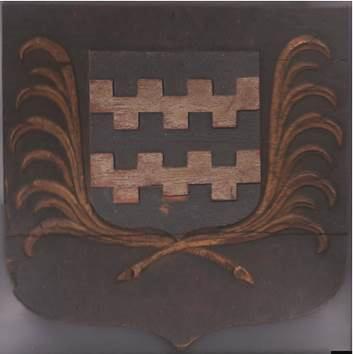
Jan van Arkel’s seal is attached to the deed of 1263 (picture 1). De Jong’s book shows coats of arms of Van Slingerland families, in the sections on Neder- and Over-Slingeland (pp 135 and 139). This seems to suggest that each crest belongs to the manor discussed in that section, but that suggestion seems untenable to me: the information that is given is simply not precise enough. Picture 2 reproduces crests from the website of the Centrum voor Familiegeschiedenis (Center for Family History). Picture 3 shows the coat of arms of the former town of Arkel. Picture 4 is a picture sent to me by Sue Virgilo; it’s the coat of arms handed down in her Slingerland family.
The message is clear. The crest in the seal of Jan van Arkel is the core of the crests used by Slingeland(t) families. The origin of this crest is confirmed in the coat of arms of the town of Arkel and the explanation provided on the website. This suggests an interesting twist. Over-Slingeland is most clearly associated with the Van Arkel family, if only for a brief period. Over-Slingeland is the eastern part of Slingeland, towards Arkel and Gorinchem. The prominent family of Van Slingeland, based in Dordrecht, is associated with Neder-Slingeland. They are not linked with the van Arkel family, yet they carry the coat of arms of Van Arkel. Neder-Slingeland is the western part of Slingeland, properly facing towards Dordrecht, the city at the western rim of the Alblasserwaard.
6 https://www.genealogieonline.nl/stamboom-driessen/I73311359.php, several entries
7 The full history of the link between family name and geographic location remains obscure. The website http://www.kareldegrote.nl/Reeksen/ToonReeks.php?Reeks=86 refers to prominent Van Slingerlands in the 15th century, including burgomasters of Dordrecht. To quote: “The roots of the dynasty of Van Slingeland that uses the cooking pot in its coat of arms (see below, jh) ly in the Alblasserwaard (the lands between the rivers Lek and Merwede, jh), in particular Oud-Alblas. This is where the founding father of the family lived, Willem Jansz. van Slingeland, entitled to citizen rights of Dordrecht (1429). His origins are unknown, but there are some indications for a connection (as a bastard?) with Jan Jansz. Van der Tijmpel said of Slingeland: in 1406 Willem Jansz. Is mentioned in connection with a charter insured on land in the Houttuijn in Dordrecht and in 1410 Willem Jans sold land in Bleskensgraaf land in Bleskensgraaf, on lease to Jan Alaerdssoen. Jan van Slingeland lived in the Houttuijn and in 1396 Jan Allerdszoon and Jan van Slingeland are mentioned as heirs to ‘Jan Suijssen children’. But other hypotheses on Willem Jansz. van Slingeland’s origin are conceivable: in the 14th century we can find several persons named Van Slingeland in the Alblasserwaard. For example, a Willem van Slingeland in another family line is mentioned in 1365, 1366 and 1384 as one of the important lords in
the Alblasserwaard. (Source: NL 2001, kolom 564)”. I cannot assess the reliability of this information.
Sue Virgilio has informed me that the board with the coat of arms handed down in her family was bought at an auction in Amsterdam in 1896.
Teunis Cornelisz Slingerland
Teunis Cornelis (“Antoni”) Slingerland(t) is on record as born in Amsterdam on April 7 1617 and deceased in Hackensack, Bergen County NJ, after May 25 1700. He was the son of Cornelis Slingerland and an unknown mother. He married twice, first to Engeltje Bradt, in 1654 in Beverwijck, New Netherland and then to Giertje (Jelles) Fonda on April 9 1684 in Albany, Albany County, Province of New York. He is supposed to have come to Beverwijck around 1650 travelling on a VOC ship8.
The documents available in the Amsterdam City Archives do not show a Teunis Cornelisz Slingerlandt around 1650. There is no Slingerland(t) in Boedelpapieren 1634-1938, Confessieboeken 1535-1732, Doopregisters 1564-1811 and Poorters 1531-1652. In de Ondertrouwregisters 1565-1811 (Notices of Marriage) we hit 21 times upon a van Slingerlandt variant, 16 men and 5 women. In the 17th century they are: van Slingeland, Anthoni – 27-01-1691; van Slingelandt, Simon – 15-07-1690; van Slingelant, Elisabet – 29-03-1646; van Slingelant, Melchior – 18-06-1639; van Slingelant, Rebecca – 29-03-1698; Slingerlandt, Pieter Jansen – 20-05-1672. No Cornelis who might have been father to Teunis.
Taking these registers as reliable, there is around 1650 no Teunis Cornelisz who has been baptised, was a citizen or an orphan, interrogated as a suspect or announced his marriage. According to the Begraafregisters 1553-1811 during that period 61 persons with the name Slingerland have been buried, 18 in the 18th century, 1 in the 19th century and a Dirk in 1691. 15 persons with the name Slingerlandt have been buried, including 4 around 1650, in 1659, 1681, 1687 and 1696. Searching on Van Slingerland(t() brings no hits. Registers of population or births are not available on the website of the City Archives. A record of any Cornelis who might have fathered Teunis was not found.
For sure there were Slingerlands who sailed out on VOC ships. But the Archief Opvarenden9 (Sailors Archive) does not reach far enough into the past: it covers 1699-1974. It does include Slingerlanders: Hendrik from Leiden (departed in 1767), Jacob from Amsterdam (1787), Willem from Haarlem (1747), Claes Thomasz from Noortwijck (1672) and Cornelis Roelofs from Munnikend (1697).
Internet points to Slingerlands in other sources, including relevant time periods. And there is an abundance of descendants. According to the Register of Family Names (Familienamenbank) 2570 persons carried the name (Van) Slingerland in 2007; 30 had the name of Van Slingerlandt, virtually all living in or near Amsterdam. The name (Van)
8 https://www.wikitree.com/wiki/Slingerland-3
9 https://www.nationaalarchief.nl
Slingeland no longer existed in 2007: the 6 namebearers still around in 1947 by then had all disappeared.
We may confidently conclude that in the early 17th century, the family name of Slingerland was not unknown in Amsterdam. We need not be surprised that a Teunis Cornelisz Slingerland, born in Amsterdam around 1650 sailed by VOC ship to Beverwijck. In the region of Dordrecht, the family name Slingerland has been used since the Middle Ages. The City Archive of Dordrecht records a Cornelis Slingerlandt in a sales contract of 169610. But a link with the manor of Slingerland or the Lords of Slingerland is not likely. I have not found any support for such a link in available documents. The name Teunis never appears in Slingeland family trees. Teunis is not the sort of name found among patricier families. The coat of arms acquired at an auction is not a piece of evidence of any kind of link.
Teunis Cornelisz, with one leg on each side of the Atlantic Ocean, has left his mark on the land of destination but in the land of origin his traces have been erased. His roots could not be detected. We cannot exclude that Teunis Cornelisz has his ancestry in a family and/or location Slingerland that has nothing to do with the Sincland that once emerged in swamps along the kil that became a little river called the Giessen11. Too bad. New Amsterdam, New Zealand, New Slingeland, it would have been such a nice series.
Hoornaar, January 2020
10 302-23 Schepenakte van lening door Francois Valentijn aan Cornelis Slingerlandt en Maria Elisabet van Regenmorter van 4.000 gulden, 16 mei 1696
11There was a Dirk Slingerlant, son of Cornelis Slingerlant, born in 1660 in Zevenhoven, between Leiden and Amsterdam (https://www.genealogieonline.nl/stamboom-slingerland/stamboom/I989/). In the 17th century several Slingerlanders lived in the Leiden area. Near Doetinchem, close to Germany flows a river Slinge and the hospital has the name Slingeland.
Pictures
1. The seal of Jan van Arkel to the deed of 1263
2. Coats of arms van Slingeland(t) family: Centrum voor Familiegeschiedenis ; https://cbgfamiliewapens.nl
2.1. Used by Govert van Slingeland(t) Barthoutsz, Vrijheer van Slingelandt. Vroedschap van Dordrecht 1718.
2.2.Used by Barthout van Slingelandt Dammaszn; Vroedschap van Dordrecht 1694 – 11 september 1727
2.3. Used by Pompe van Slingerland
3. Coat of arms, town of Arkel
Coat of arms former town of Arkel
The coat of arms was used from December 24 1817 to 1986. The crest was identical to the crest of the House Van Arkel and thereby identical to the crest of The Land of Arkel, a feud
on lease from the Counts of Holland. It is also used as a quarter in the coat of arms of the House Egmont.
https://nl.wikipedia.org/wiki/Wapen_van_Arkel
4. Coat of arms, Slingeland NY family (Sue Virgilio)
Map of Alblasserwaard 1726 ; Regionaal Archief Dordrecht
J. Kuyper – Gemeente-atlas van Nederland naar officieele bronnen bewerkt.
Kaart uit ca. 1865-1870 van de voormalige gemeente Peursum, momenteel onderdeel van de gemeente Giessenlanden (Prov. Zuid-Holland)
“De angstige wekroep “het water komt” heeft tientallen malen weerklonken op de dijken en over de hennepakkers en de weiden”. Zo begint Maarten Schakel, geboren in 1917 in Meerkerk en overleden in 1997, zijn boekje De waterwolf slaat toe. Hij was burgemeester van Hoog Blokland, Hoornaar en Noordeloos van 1946 tot 1986 (waarvan de laatste vier jaar waarnemend). Hij was ook secretaris- penningmeester van waterschap De Overwaard, en in die functie had hij eenvoudig toegang tot de archieven. Met zijn intense belangstelling voor de lokale geschiedenis en zijn lust om die geschiedenis in woord en geschrift uit te dragen heeft hij op die rijke akker vruchten voortgebracht waarvan we nog steeds volop kunnen genieten.
Het boekje werd geschreven na de watersnoodramp van 1 februari 1953, in een goed jaar tijds: als einddatum staat maart 1954. Het biedt een overzicht van alle overstromingen in de Alblasserwaard sinds het ontstaan van het hoogheemraadschap in 1277. Het begint met een classificatie van al die overstromingen en geeft vervolgens een bespreking van elk afzonderlijk, op basis van verslagen in de archieven, rekeningen voor herstelwerkzaamheden, vergaderstukken, etc, hier en daar aangevuld uit andere bronnen. Van de voorzitter van de vereniging kreeg ik één van de laatste exemplaren die nog in het archief aanwezig waren en ik heb het met groot plezier gelezen. Hier zal ik de classificatie van de “vloeden” samenvatten, en een enkel detail uit de gedetailleerde rampenbeschrijvingen citeren.
De overstroming van 1953 was de 33e sinds 1277. De voorlaatste was in 1820, zodat er tot 1953 gemiddeld één overstroming in ruim 20 jaar was, en tot 1820 één in de 17 jaar. Het ergst was in dit opzicht de periode 1523-1574, met 10 overstromingen, gemiddeld eens in de 5 jaar. Het hoogst heeft het water gestaan in 1741. Naar wateroverlast gemeten was de ramp van 1953 in de Alblasserwaard zeer bescheiden.
Schakel onderscheidt 4 soorten overstromingen: opperwater, vloedwater, ijsdammen en militaire inundaties. De 33 overstromingen betroffen 15 keer opperwater, 9 keer stormvloedwater, 6 keer ijsdammen en 3 keer militaire inundaties. Gemeten naar oplopende schade is de volgorde stormvloeden, opperwater uit Lek en Merwede, ijsdammen en opperwater uit de Betuwe.
Over de militaire inundaties zegt Schakel niet veel, daar is het waterschap immers niet voor verantwoordelijk. Hij bespreekt alleen de inundatie van 1574 tijdens de Opstand; de andere twee worden niet benoemd, maar die zijn te dateren in 1672 en 1944. De inundatie van 1672, tegen de invasie van het Franse leger, verliep chaotisch, door het verzet uit Gorinchem en van de boeren in de omgeving. In 1944 heeft de Duitse bezetter de aloude waterlinie geactiveerd, en werd de grens tussen Alblasserwaard en Vijfheerenlanden onder water gezet.
Bij stormvloeden jaagt een storm het water uit de Noordzee naar binnen, en ontstaat de schade in het westelijk deel van de Waard. De stormvloeden horen vooral bij najaarsstormen. Van de 9 vallen er 6 in november (1-1- 1470, 5-11- 1530, 1-11-1532, 14-11-1552, 1-11-1570,?-11-1590 en 1 eind oktober (21-10-1468), de andere twee vallen in februari (2-2-1373, 1-2-1953). Stormvloeden doen zich in onze streek niet gelden tussen 1599 en 1953. Het is inmiddels genoegzaam bekend dat in 1953 de zeedijken in verwaarloosde toestand verkeerden.
IJsdammen, zo schrijft Schakel, vallen in de kerstvakantie: januari 1573, 01-01-1624, 17-12-1655,30-12-1658, 20-01-1663 en één uitzondering: 19-03-1709. Bij een ijsdam zoekt het opperwater een doorgang langs de dam, en tast zo de dijk aan. Viermaal brak daardoor de Merwededijk, twee keer bij Gorinchem, twee keer bij Hardinxveld. De andere twee breuken vielen in de Lekdijk (waarvan overigens één ter hoogte van de Vijfheerenlanden). Alle ijsdammen komen voor in de Kleine IJstijd zoals beschreven op de website van het KNMI, een periode die duurde van ongeveer 1430 tot halverwege de negentiende eeuw, met een gemiddelde temperatuur 1 a 2 graden beneden de huidige. Het dieptepunt viel in het laatste kwart van de 16e eeuw (het koudste van de afgelopen duizend jaar) en het eerste kwart van de 17e eeuw.
De meeste beroering wordt veroorzaakt door problemen met het opperwater uit de Betuwe. Als de rivierdijken boven Gorinchem en Hagesteijn breken, klotst het water uit het oosten tegen de achterdeur, dwz tegen de dijken langs de Zouwe: de Zouwendijk en de Bazeldijk. Maar al in 1284 werd daartoe een extra achterdeur gebouwd: de Diefdijk. Perfect was die beveiliging in de eerste eeuwen zeker niet, want de dijk brak voor 1413, in 1497, 1523, 1565, 1571 en in 1573. Maar daarna nooit meer. Beneden de Diefdijk kon de Linge ook door opperwater boven zijn vermogen belast worden; dan spoelde het water tegen Bazeldijk en Zouwendijk. Kedichem was een beruchte zwakke plek, met breuken in 1726, 1740 en 1809.
De spanning tussen de belangen van de Betuwe en de Alblasserwaard konden hoog oplopen. Al in het Handvest van 1277, dat sluiting van een ringdijk om de Alblasserwaard bezegelde met de aanleg van de Zouwendijk, van Ameide tot Hoog Blokland, wordt met die spanning rekening gehouden. De Heren die het Handvest ondertekenden, en allen die onder deze Zouwendijk wonen, zijn gehouden om zich in te zetten tegen al degenen die de dijk willen doorsteken, of ze nu “vriend, maagd of heer zijn”. Bescherming van eigen have en goed gaat boven de solidariteit van vriendschap, maagschap of heerlijke macht.
Het rampjaar 1726 biedt een treffende illustratie. Voor een beschrijving van dat jaar put Schakel uit een boekje van Jacobus van Vechoven, substituut-watergraaf van De Overwaard en dus nauw betrokken bij de gebeurtenissen. In de eerste wintermaanden van 1726 stond het water zeer hoog, zowel binnen als buiten de dijken, en er vormden zich ijsdammen. Spuien werd daardoor zeer bemoeilijkt, zeker toen ook nog westerstorm het water opjoeg. Na een dijkbreuk bij Kedichem stond ook oost van de Alblasserwaard het water zeer hoog. Toen in maart het water begon te zakken, bleken in Zouwen- en Bazeldijk grote gaten ingescheurd. Het Dijkcollege van de Alblasserwaard besloot deze te dichten. Maar daar waren de oosterburen niet van gediend, die wilden hun water wel kwijt. Op 3 april verzamelde zich in Meerkerk een grote menigte, boeren die op schuitjes uit de Vijfheerenlanden waren gekomen, gewapend met snaphanen, pistolen en spaden, en voornemens om Zouwen- en Bazeldijk op diverse plaatsen door te steken. Toen de boeren bij Hoenderwiel, net boven Meerkerk, metterdaad aan het graven sloegen, probeerde de schout van Meerkerk dat te verhinderen, maar uit angst voor de spanhaan deinsde hij terug. Aangemoedigd door hun succes zette de meute zijn graafwerk voort bij de Grote en de Kleine Wiel in Hoog Blokland. Daarop werd het leger gealarmeerd, een officier met 25 soldaten daagde uit het garnizoen in Gorcum. Op de Bazeldijk ontwikkelde zich een heuse veldslag, waarbij één van de vluchtende gravers werd doodgeschoten en een tweede gewond raakte. Inmiddels uit de Alblasserwaard opgetrommelde boeren deden er nog een schepje boven op, in een stevige knokpartij, waarna de boosdoeners bebloed afdropen. Vervolgens werd met man en macht gewerkt aan het dichten van de gaten. De herstelde dijk werd onder militaire bewaking gesteld, en de rebellenleider werd voor zijn leven verbannen uit Holland en Westfriesland, met verbeurd verklaring van al zijn goederen.
In de loop van de tijd zie je de frequentie van de overstromingen eerst toenemen en dan afnemen. Nemen we het aantal overstromingen per eeuw dan tellen we er 1 in de 14e , 6 in de 15e , 13 in de 16e , 5 in de 17e , 2 in de 19e en 2 in de 20e eeuw. Maar een eeuw is een volstrekt willekeurige indeling. De wachttijd tot de volgende overstroming is daarom een informatievere maatstaf, zij het niet voor de toenmalige bewoners, want die wisten niet wanneer het weer raak zou zijn. Duidelijk is dat na 1820 de grote ellende achter de rug is. De militaire inundatie van 1944 betrof een beperkte grensstrook en de ramp van 1953 bracht ook weinig water binnen.
Het boekje van Schakel is een prachtig document, door zijn rijkdom aan details, en evident genoegen om treffende formuleringen in de taal van weleer op de toonbank te leggen. Het enige wat ik mis is een gespecificeerde verantwoording van de bronnen. Dat maakt het moeilijk om een vergelijking te maken met een andere rijke bron, het werk van
Elizabeth Gottschalk Stormvloeden en rivieroverstromingen in Nederland, (Van Gorcum, Assen 1971-1977), waar in 3 delen de overstromingen in de Nederlanden zijn weergegeven die ze met voldoende betrouwbaarheid kon documenteren, van de vroegste tijden tot de 17e eeuw. Ik heb daaruit de vermeldingen voor de Alblasserwaard geselecteerd, maar die lijstjes zijn niet identiek. Tussen 1277 en 1677 vermeldt zij 1373, 1446, 1468, 1496, 1523, 1530, 1532,1570, 1571, 1573, 1573, 1595, 1663 en 1673. Dat zijn er 14 van de 25 die Schakel noteert. Zij rapporteert ook 14 vloeden die Schakel niet vermeldt. Geen van beiden zal een vloed verzonnen hebben of bewust verzwegen. Het moet dus gaan om verschillen in bronnen (Schakel gebruikt, naar het schijnt, alleen de archieven van het hoogheemraadschap, Gottschalk zoekt ruimer en verwijst ook naar de vindplaatsen) en mogelijk ook verschillen in definitie. Gottschalk meldt in 1483 “wateroverlast”en dat vinden we niet terug bij Schakel. In 1513 is volgens Gottschalk de boel ondergerekend en in 1563 de Diefdijk overgestroomd, in 1625 stond Wijngaarden onder water, en dat staat niet op de lijst bij Schakel. Er ligt dus nog een leuke klus om de verschillen tussen beiden te traceren. Eén verschilletje kon ik gemakkelijk oplossen. Gottschalk schrijft dat in 1659 alle dorpen in de Alblasserwaard onder water staan door een dijkbreuk bij Hardinxveld, maar de preciese datering van Schakel brengt uitkomst: op 30 december 1658 zorgde een ijsdam voor die breuk. Dan hebben dus beiden gelijk. Frappant is wel dat Gottschalk schade vermeldt in 1421/1422, door een breuk ten tijde van de St Elizabethvloed en Schakel daarover zwijgt. Hij schrijft zelfs expliciet, op pagina 10, dat tijdens die ramp de Alblasserwaard “boven water bleef”. Zou hij jaloers geweest zijn dat Elizabeth Gottschalk wel een vloed op haar naam heeft staan en Maarten Schakel niet? Er komen mooie namen voor, zoals Allerheiligenvloeden ( drie keer) en de St Pontianus vloed (19 november 1497, naar een paus die verbannen werd naar de mijnen van Sicilië), maar voor zover ik kan nagaan is er tijdens St Maarten nooit een dijk gebroken. Maar zoals bekend werd onze burgemeester geroemd als een man uit één stuk.
OVERSTROMINGEN IN DE ALBLASSERWAARD 1277-1953
| JAAR | DATUM | SOORT | WACHTTIJD |
| 1373 | 2 februari | storm | < 41 |
| 1413 | vóór 1413 | > 33 | |
| 1446 | 10 april | opper | 22 |
| 1468 | 21 oktober | storm | 2 |
| 1470 | 1 november | storm | 26 |
| 1496 | 16 februari | opper | 1 |
| 1497 | 26 | ||
| 1523 | 7 | ||
| 1530 | 5 november | storm | 2 |
| 1532 | 1 november | storm | 20 |
| 1552 | 14/15 januari | opper | 0 |
| 1552 | 14 november | storm | 13 |
| 1565 | 22 maart | opper | 5 |
| 1570 | 1 november | storm | 1 |
| 1571 | 11-12 februari | opper | 2 |
| 1573 | januari | ijsdam | 1 |
| 1574 | inundatie | 19 | |
| 1593 | 19 maart | opper | 2 |
| 1595 | 23 maart | opper | 4 |
| 1599 | november | storm | 25 |
| 1624 | 1 januari | ijsdam | 31 |
| 1655 | 27 december | ijsdam | 3 |
| 1658 | 30 december | ijsdam | 5 |
| 1663 | 20 januari | ijsdam | 9 |
| 1672 | inundatie | 37 | |
| 1709 | 17 maart | ijsdam | 17 |
| 1726 | 7 februari | opper | 14 |
| 1740 | 24 december | opper | 1 |
| 1741 | 3 januari | opper | 3 |
| 1744 | 12 maart | opper | 65 |
| 1809 | 30 januari | opper | 11 |
| 1820 | 25-25 januari | opper | 124 |
| 1944 | inundatie | 9 | |
| 1953 | 1 februari | storm |
Bron: Schakel, Waterwolf; inundaties 1672 en 1944 toegevoegd.
Wachttijd: wachttijd in jaren tot de volgende overstroming
Translation of “A tale of two Slingerlands”
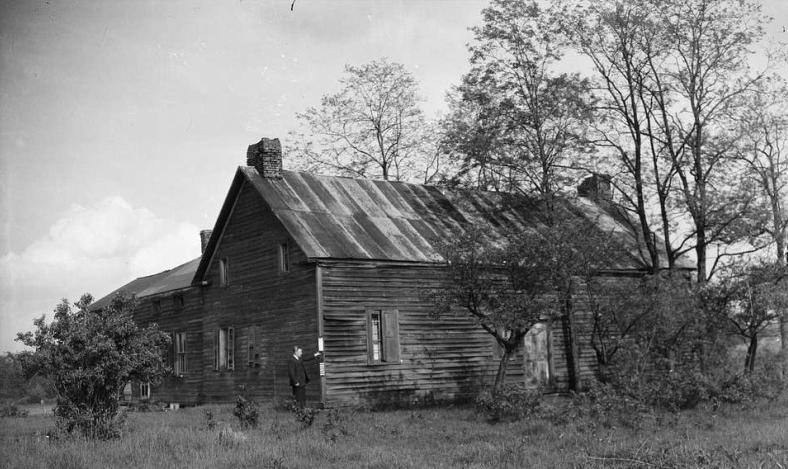
A friend of mine, professor of economics at SUNY Albany, lives in Slingerlands NY, a name tag that always struck me: I live near Slingerland in The Netherlands, a hamlet 30 kilometers east of Rotterdam. When I visited again in 2019, he showed me a newspaper article on a family named Slingerland, descendants of the Dutchman that gave the town its name. Family members were engaged in reconstructing the family burial vault. In mid-19th century, Slingerlands NY was named after William H. Slingerland, postmaster and surveyor for the construction of the railroad.
I decided to seek for a possible connection between Slingerlands NY and my Slingeland NL. I learned that the Slingerland family take their roots back to Teunis Cornelisz Slingerland. Teunis Cornelis (“Antoni”) Slingerland(t) is on record as born in Amsterdam on April 7 1617 and deceased in Hackensack, Bergen County NJ, after May 25 1700. He was the son of Cornelis Slingerland and an unknown mother. He married twice, first to Engeltje Bradt, in 1654 in Beverwyck, New Netherland and then to Giertje (Jelles) Fonda on April 9 1684 in Albany, Albany County, Province of New York. He is supposed to have come to Beverwyck in 1650 travelling on a VOC vessel . I had to conclude that a connection between Slingerlands NY and Slingeland NL, through Teunis Cornelisz (TC for short), in all likelihood must be ruled out. Yet, once on the track of TC, I found it hard to give up on the search for his origin in the Dutch Republic. If not in my Slingeland NL, then where?
My tale of two Slingerlands was circulated among American – Canadian members of the Slingerland family. One of them, Jennifer Slingerland Chenette, sent me a transcript of “a short bio on Teunis written by Stefan Bielinski” in the Schenectady, NY History Archive (posted on June 15, 2005):
“Teunis Cornelise probably was born in Europe before 1640. By 1658, he had taken title to the house and lot in Beverwyck where he then was living. In 1660, his name appeared on a petition of fur traders operating from the Beverwyck area. He also kept a house in New Amsterdam. In 1677, he leased a farm on the Normanskill from the Bradt family. By that time, he had married the mill owner’s daughter, Engeltie Bradt. The marriage produced at least 4 children prior to her death in 1683. In April 1684, he married the widow Geertie Fonda Bekker at the Albany Dutch Church where he was a member. At least one child resulted from his second marriage. Although he appeared to have held considerable lands in the valleys south of Albany, he maintained his Albany identity for many years. By the 1690’s, his name had dropped from Albany rolls”. The Belinsky note conforms to the WikiTree data and adds a few details.
There are several other pieces of information on TC, but not all of it seems reliable, and we should carefully check the sources. Trustworthy infurmation is given by Donna Merwick (1990), an established scholar who documented the settlements that would become Albany.
In 1609 Henri Hudson, commissioned by the VOC, first landed at Mannahatta and then, hoping to find the short seeway to India, sailed up the wide riwer that the Dutch later would call the Noordrivier and the English thereafter the Hudson river, up to later Albany. In 1614, the Dutch built Fort Nassau there, as the first trade post (fur trade, mostly), the first documented European structure. In 1618 the fort was ruined by a flood, but in 1624 it was rebuilt as Fort Orange, after the WIC had been founded in 1621. The initial settlers were private traders. One of the investors was Kiliaen van Rensselaer (1586-1648), who establised the Rensselaer colony, north and south of Fort Orange, on both sides of the river. However, Kilian himself never visited New Netherland. 1624 was also the year when New Amsterdam was established as a WIC settlement. In 1629, Van Rensselaer, board member of the WIC in Amsterdam, declares himself patron of he Rensselaer colony. In 1652, the area around Fort Orange is incorporated as the village of Beverwijck, in 1686, under British rule, it becomes the city of Albany.
Merwick (1990) presents much information on the early settlement of Beverwyck. She writes (p 7) that Fort Orange was abandoned after 1624 and that only in the late 1620’s the WIC and Van Rensselaer started serious, but still modest settlement. “This settlement, however, lacked the basis elements of continuity in a notable way. It had no founding moment”. As noted above, that founding moment did not come until 1652. Before 1652 it had no single name, it was just Fort Orange and Rensselaerswyck. The settlers of 1624 and those who arrived in small numbers in the early 1630’s were solders and traders at the fort and colonists sent by Van Rensselaer. By 1643 Rensselaerswyk was firmly established, some 24 miles on both sides of the river. There were possibly nine dwellings in the fort on the west bank, with no more than 25 traders and possibly the same number of soldiers, but likely less. On the east bank was another concentration of Dutch men and women, possibly a dozen artisans (o.c., 12). In the mid 1630’s Van Rensselaer had 3 farms rented out. Three quarters of the colonists who had arrived before 1633 were gone by 1634 (o.c., 30). Van Rensselaer was interested in land and farming, the Company in trade and there was clear rivalry among them.
The settlements around Fort Orange and Nieuw Amsterdam were connected by ships riding the Noord Rivier. Ties between Nieuw Amsterdam and Beverwyck were strong and many “burghers” of Berverwyck had business connections in Nieuw Amsterdam. Among these burghers, we find Cornelis Teunisse Slingerlandt. In a chapter on the years 1652-1664, Merwick writes that 25 men have “properties owned there”. The footnote says that she used public records of Beverwyck and New Amsterdam to compile investment portfolios and to list names of Beverwyck burghers “whose names appeared specifically related to a resident of New Amsterdam, either as partner, broker or creditor” (o.c. 110). On page 115 she writes: “Cornelis Teunisz Slingerlandt and Storm Van der Zee each held 2/8 ownership of a house rented in 1662 to New Amsterdam’s burgomaster, Allard Anthonij”. TC is not listed among the men who owned a yacht (o.c. 111). But he does appear among the 49 Beverwijck townsmen and townswomen who shipped financial papers (bonds, receipts, wages, accounts) between Beverwyck and New Amsterdam that tied them to families and business associates in the Dutch Republic (p 120-121). At least 19 of them had dealings with partners in Amsterdam. Interests of the other 31 were located outside Amsterdam . Among those 31 we find Cornelis Teunisse Slingerlandt and Teunisse Corneliszn Slingerlandt. So, now we have a new puzzle: is this father and son or son and aand father? TC’s father was Cornelis, TC had a son Cornelis Teunis (see WikiTree). The son Cornelis Teunis was born in 1660; sources are given in his WikiTree entry . WikiTree lists TC’s father Cornelis as born about 1597 in Nederland, but has no other information. Detailed information is given in My Heritage, with reference to Ancestral File Number B5T4-QL. TC is reported as baptised in Amsterdam April 7, 1617, is recorded to arrive in 1620 in New Netherland, in 1624 in New Amsterdam, in 1650 in Albany, in 1650 to have residence in New Netherland, in 1654 to arrive in New York and as deceased in 1701 in Hackensack NJ. In 1654 he was married to Engeltje Bradt in Beverwyck, in 1684 to Geertje Jellise Fonda in Albany. His father was Cornelis Slingerland 1590-1638 and his mother “Mevrouw“ (Mrs!) Slingerland, 1595-? Source for TC arriving in 1620 appears to be “Passagiers- en immigratielijsten, 1500 – 1900” (Lists of passengers and immigrants 1500-1900). If this is correct, TC came with his father Cornelis in 1620 as a 3 year old boy, as one of the earliest settlers. The information on TC for the years after 1650 conforms to other sources. To find the Dutch roots of the Slingerlands, Cornelis is pivotal. But if he died in 1638 he can not be the Cornelis (Teunisse) that Merwick finds among the Beverwyckers with business connections in Amsterdam.
In 1947, there were 1446 persons with the name Slingerland in The Netherlands; there were also persons named Van Slingerland; no one had the name Slingerlandt. The Slingerlands were spread all over The Netherlands, but concentrated in the western part, and most of them in the province of South Holland, with a cluster of 221 in Rotterdam and 102 in Amsterdam.
An American Slingerland descendant, Jennifer Chenette, suggested that TC’s parents were Cornelis Slingerland (1590-1653) and Neeltje Arlend Oskam (1595-1653) and Cornelis’ parents Klass Leenderce Van Slingerlandt – born in 1570 in Zevenhoven and Aafje Jochems Bentshap. I took this information to the Historical Society Liemeer, where Lenette Rijlaarsdam of the genealogy section took a vivid interest in the search. Lenette checked on father Cornelis: In the Register of Baptisms of the Nederlands Hervormde Oude Kerk in Amsterdam, 1601 – 1634, she finds an Antonis, baptised April 9, 1617. She adds that mother’s name is legible but father’s name cannot be reasonably interpreted as Cornelis.
In the records of Liemeer-Zevenhoven (near Leiden) Lenette finds the names cited by Jennifer, but as persons who have lived later than TC and Cornelis, not earlier. In 1623, she finds two families headed by a Cornelis with a son named Tonis. One of them, Cornelis Jansz, is married to Anna. TC himself had a daughter Annatje (“little Anna”), who may have been named after her grandmother; Cornelis Jansz had a daughter named after her mother Annetgen.
One other piece of information with unchecked reliability is from a document that Jen Chenette inherited from her father: “First Teunis Slingerland came over in “Bonte Kow” (The Spotted Cow), 1650-1654 – records of mrs John Ray Slingerland Century Farm 1685”. Farelli’s list (see note 5) lists sailings of the Bonte Koe in 1655, 1656, 1660 and 1663; this does not match TC’s bio data with marriage in 1654. Between 1624 and 1664 there were 86 boat trips from Nederland (Amsterdam mostly) and New Netherland; the first two came in 1624. My Heritage gives arrival dates for TC of 1620 and 1624.
An other informer checked on passenger lists of ships sailing to New Netherland, but found no Slingerlands. There is an interesting list of references though, see below; passengers state their home address.
New Netherland Ships Passenger Lists Project
I’ve started reconstructing ships’ passenger lists from various source (see below for details) and will be providing these lists online as I complete them. In some cases, I’ve been able to reconstruct names for a ship list that has never been published before! In other cases, I’ve been able to add names to previously published lists. This is an Olive Tree exclusive.
This is a huge project, one I am working on alone, and I will complete it as time permits. If you would like to help Olive Tree bring such databases to the Internet for all to use FREELY, please read about the two ways you can help. With a little expenditure of time or money on your part, you can help make this project (and others) a reality.
Lorine’s Research Notes With Sources: I reconstructed the names of those sailing on various ships from the following sources. Please note that not every source was used to reconstruct every ship. I have indicated which sources were used for each individual:
1. Abstracts from Notarial Documents in the Amsterdam Archives by Pim Nieuwenhuis published in New Netherland Connections in series Vol. 4:3,4; Vol. 5:1-3 (hereafter NNC)
2. Early Immigrants to New Netherland 1657-1664 from The Documentary History of New York (hereafter EINN)
3. Settlers of Rensselaerswyck 1630-1658 in Van Rensselaer Bowier Manuscripts (hereafter VRB)
4. E. B. O’Callaghan’s Calendar of Historical Manuscripts in the Office of the Secretary of State, Albany NY (hereafter CHM)
5. New World Immigrants: List of Passengers 1654 to 1664 edited by Michael Tepper (hereafter NWI)
6. Emigrants to New Netherland by Rosalie Fellows Bailey, , NYGBR; vol 94 no 4 pp 193-200 (hereafter ENN)
7. De Scheepvaart en handel van de Nederlandse Republiek op Nieuw-Nederland 1609-1675 unpublished thesis by Jaap Jacobs [hereafter JJ][Olive Tree Genealogy database]
8. The records of New Amsterdam from 1653 to 1674 [hereafter RNA] [an online book from Ancestry.com]
• Check for TC arriving in 1620 (My Heritage) on “Passagiers- en immigratielijsten, 1500 – 1900” (Lists of passengers and immigrants 1500-1900). TC? Or TC with father Cornelis?
• Locate the source for Cornelis bio years: 1590-1638 and where he died
New Netherland along the Hudson River has been extensively studied; references can be found through Jaap Jacobs, St Andrews University
A marvellous website is: North America, Colonies, Kolonien, Dutch. Nederlands (farelli.info); contains the ship list (Bonte Koe sailed in 1655, 1656, 1660 and 1663). Between 1624 and 1664 there were 86 boat trips from Nederland (Amsterdam mostly) and New Netherland.
Jennifer also sent information on TC’s parents:“digging on ancestry and looking at other people’s family trees on there, made me list Teunis’ parents as:
Cornelis Slingerland (1590-1653)
Neeltje Arlend Oskam (1595-1653)
Cornelis’ parents appear to be:
Klass Leenderce Van Slingerlandt – born in 1570 in Zevenhoven
Aafje Jochems Bentshap
Klass’ parents appear to be:
Leendert Van Slingerlandt
Aaltjen Thijsz Kleijn”
Monty Slingerland, descendant of TC living in Niagara-on-the-lake (Ontario, Canada), had informed me that Klass Leenderce Van Slingerlandt was born in Liemeer (Zevenhoven is part of Liemeer). I took this information to the Historical Society Liemeer, where Lenette Rijlaarsdam of the genealogy section took a vivid interest in the search. Lenette checked on father Cornelis: In the Register of Baptisms of the Nederlands Hervormde Oude Kerk in Amsterdam, 1601 – 1634, she finds an Antonis, baptised April 9, 1617. She adds that mother’s name is legible but father’s name cannot be reasonably interpreted as Cornelis.
In the records of Liemeer-Zevenhoven (near Leiden) Lenette finds the names cited by Jennifer, but as persons who have lived later than TC and Cornelis, not earlier. Klass (Claas) Leenderts en Aafje/Eefje lived about a century after Cornelis, which rules out parenthood; Claas Leendertse was born around 1711, Eefje/Aafje Benshap/ Brenschop around 1714. Klaas Leendertse was indeed a son of Leendert and Aaltje; Leendert was buried in 1754, Aaltje came from nearby Rijnsaterwoude in 1722 with two children, Dirk aged 16 and Claas Leenaarts then aged 11. Lenette also notes that Neeltje Oskams husband Cornelis “came from elsewhere” and has Ariens as father’s name. In 1623, she finds two families headed by a Cornelis with a son named Tonis. One of them, Cornelis Jansz, is married to Anna. As TC himself had a daughter Annatje (“little Anna”), who may have been named after her grandmother; Cornelis Jansz had a daughter named after her mother Annetgen.
My friend in Slingerlands NY sent me information on TC from six websites on My Heritage: Galyean/James, Galyean/Barbara, Appel, Banta, Vrooman and Krull. Most detailed is the information from Galyean/James, under Ancestral File Number B5T4-QL. TC is reported as baptised in Amsterdam April 7, 1617, is recorded to arrive in 1620 in New Netherland, in 1624 in New Amsterdam, in 1650 in Albany, in 1650 to have residence in New Netherland, in 1654 to arrive in New York and as deceased in 1701 in Hackensack NJ. In 1654 he was married to Engeltje Bradt in Beverwijck, in 1684 to Geertje Jellise Fonda in Albany. His father was Cornelis Slingerland 1590-1638 and his mother “Mevrouw“ (Mrs! ) Slingeland, 1595-?
The other websites repeat some of this information, and some add details. Banta notes May 25, 1700 as date of TC’s death. Galyean/Barbara gives 1615 as the year Mrs Slingeland is married to Cornelis in Amsterdam. She is registered as having a son Teunis Cornelise 1617-1701.
Banta names the mother of TC (1617-1700) as Aechie Mabie. Vrooman names Teunis Cornelise (1590-?) as the father of TC (1617-1684) and Aechie Mebie (1582-1622) as his mother. Krull documents Aeche Mabie (born “say 1682 in Albany” as daughter of Jan Pieterse Mebie (1654-1725) and Annetje Borsboom (1665-1725) and married to Cornelis Slíngelant (1670-1753). However, Aechie is not TC’s mother, but his daughter in-law. Documents from the Albany Public Library show that Cornelis Teunise, 1674-1753, son of TC and Engeltje Bradt married Aechie (or Eva) Mebie, born in 1699 in Schenectady, Dutch Reformed, daughter of Jan Pieters Mebie and Antje Borsboom. Jan Mebie was born in Albany in 1681. The name Mebie or Mabie is now extinct in The Netherlands, but New Netherland genealogies point to roots in Naarden, just south-east of Amsterdam NL.
With TC baptised in 1617 in Amsterdam and arriving in 1620 in New Netherland, we may safely assure that his father Cornelis was with him. That would make Cornelis (1590-1638) the first Slingerland to settle in the area. TC is registered in 1650 in Albany and is indeed still likely to have planted the family tree in the Albany area. The marriage of his father Cornelis may well have taken place in Amsterdam. Cornelis will then have travelled to New Netherland in 1620, the registered year of arrival of TC. His mother’s name is not Aechie Mebie.
From Jen Chenette, I got an interesting message:
“4)From “Possessing Albany, 1630-1710: The Dutch & English Experiences” by Donna Merwick There are several references to the men from Albany with interests in New Amsterdam (New York City). I will retype one of them. Page 115 “Cornelis Teunisz Slingerlandt & Storm Van der Zee each held 2/8 ownership of a house rented in 1662 to New Amsterdam’s burgomaster, Allard Anthonij” Footnote #119 For the 25 men & women who retained property in New Amsterdam while residing in Beverwijck see note #109 (I have to find my paper copy or go back to the PSU library to get the book again to see the list of men in Footnote #109. This can not be Teunis’ son Cornelius since he is not born until 1670. So either they mixed up the names or this is possibly Teunis’ father????) As I read further, on page 121 Note #129 “The 31 residents include Cornelis Teunisse Slingerlandt, Teunisse Cornelisz Slingerlandt.”
As TC’s father Cornelis died in 1638, he was alive in the 1630-1710 interval.
Jen, can you check the date for the quotes?
Two other quotes from the Public Library document are noteworthy:
“First Teunis Slingerland came over in “Bonte Kow” (The Spotted Cow), 1650-1654 – records of mrs John Ray Slingerland Century Farm 1685”
This is clearly at variance with the information cited above from the Galyean/James genealogy, under Ancestral File Number B5T4-QL. The conflict can only be solved by checking the sources and assessing their reliability.
“The name was recorded as Van Slingerlandt in Holland, the Estate of Slingerland was located a few miles North of Gorinchem, in the province of South Holland and was in the parish of Noordeloos.”
This is squarely at variance with my conclusion that TC has no connection to Slingeland NL. Here also, the source of the quote should be checked. After all, we cannot rule out that the author simply started out from the same guess as I did and called his (her?) hypothesis a fact. Just dating the quote may already help: the former county of Holland was only dived into North and South Holland in 1840.
The Slingerlands may well have their origin in the Liemeer-Zevenhoven area. I will check the publication by A. Slingerland, Kroniek van de familie Slingerland uit de Rijnstreek en genealogie vanaf 1650 (Slingerland Chronicle since 1650), only available at CBG The Hague.
This note is built on information received from Slingerland descendants Jennifer Chenette, Becky Messing, Monty Slingerland and Sue Virgilio, from Lenette Rijlaarsdam (Historische Kring Llemeer) and from Michael Sattinger. Hoornaar September 2, 2021
In 1609 Henri Hudson, commissioned by the VOC, first landed at Mannahatta and then, hoping to find the short seeway to India, sailed up the wide riwer that the Dutch later would call the Noordrivier and the English thereafter the Hudson river, up to later Albany. In 1614, the Dutch built Fort Nassau there, as the first trade post (fur trade, mostly), the first documented European structure. In 1618 the fort was ruined by a flood, but in 1624 it was rebuilt as Fort Orange, after the WIC had been founded in 1621. The initial settlers were private traders. One of the investors was Kiliaen van Rensselaer (1586-1648), who establised the Rensselaer colony, north and south of Fort Orange, on both sides of the river. However, Kilian himself never visited New Netherland. 1624 was also the year when New Amsterdam was established as a WIC settlement. In 1629, Van Rensselaer, board member of the WIC in Amsterdam, declares himself patron of he Rensselaer colony. In 1652, the area around Fort Orange is incorporated as the village of Beverwijck, in 1686, under British rule, it becomes the city of Albany.
Merwick (1990) presents much information on the early settlement of Beverwyck, but is often vague in her descriptions . She writes (p 7) that Fort Orange was abandoned after 1624 and that only in the late 1620’s the WIC and Van Rensselaer started serious, but still modest settlement. “This settlement, however, lacked the basis elements of continuity in a notable way. It had no founding moment”. As noted above, that founding moment did not come until 1652. Before 1652 it had no single name, it was just Fort Orange and Rensselaerswyck. The settlers of 1624 and those who arrived in small numbers in the early 1630’s were solders and traders at the fort and colonists sent by Van Rensselaer. By 1643 Rensselaerswyk was firmly established, some 24 miles on both sides of the river. There were possibly nine dwellings in the fort on the west bank, with no more than 25 traders and possibly the same number of soldiers, but likely less. On the east bank was another concentration of Dutch men and women, possibly a dozen artisans (oc, 12). In the mid 1630’s Van Rensselaer had 3 farms rented out. Three quarters of the colonists who had arrived before 1633 were gone by 1634 (oc, 30). Van Rensselaer was interested in land and farming, the Company in trade and there was clear rivalry among them.
The settlements around Fort Orange and Nieuw Amsterdam were connected by ships riding the Noord Rivier. Ties between Nieuw Amsterdam and Beverwijck were strong and many “burghers”of Berverwijck had business connections in Nieuw Amsterdam. Among these burghers, we find Cornelis Teunisse Slingerlandt.
Unfortunately, Merwick is imprecise in her documentation. In a chapter on the years 1652-1664, she writes that 25 men have “properties owned there”. The footnote says that she used public records of Beverwijck and New Amsterdam to compile investment portfolios and to list names of Beverwijck burghers “whose names appeared specifically related to a resident of New Amsterdam, either as partner, broker or creditor”(oc 110). On p 117, these 25 persons are dubbed “property owners”. This, at any rate establishes that C. T Slingerlandt lived in Beverwijck at some time between 1652 and 1664. Her source (“public records”) may contain more relevant information on CT’s origin. He is not listed among the men who owned a yacht (oc 111).
On page 115 we find the information cited by Jen Chenette: “Cornelis Teunisz Slingerlandt and Storm Van der Zee each held 2/8 ownership of a house rented in 1662 to New Amsterdam’s burgomaster, Allard Anthonij” Footnote #119 They were two of the 25 men and women who retained property in New Amsterdam while residing in Beverwijck see note #109
On pages 120-121 we find another piece of information. Still in the same time interval, Merwick found evidence that 49 Beverwijck townsmen and townswomen shipped financial papers (bonds, receipts, wages, accounts) between Beverwijck and New Amsterdam that tied them to families and business associates in the Dutch Republic. At least 19 of them had dealings with partners in Amsterdam. Interests of the other 31 were located outside Amsterdam . Among those 31 we find Cornelis Teunisse Slingerlandt and Teunisse Corneliszn Slingerlandt. So, now we find father and son, but ages are not supplied. Conclusion: if we want to trace down the TC who migrated from The Netherlands, we may work from the source given in footnote 128 on page 120: Corr JvR, 345, A. J. F. van Laer (1932), Correspondence of Jeremias van Rensselaer, 1651-1674 ; Publication Albany, University of the State of New York, 1932, Genealogy & local history, LH3977
Henry Hudson arrived in 1609 in Manhattan and sailed on to the location of Fort Orange/ Rensselaerswyck/Albany but he did not come to settle. In 1614 Fort Nassau was built, but in 1618 it was ruined by a flood. In 1621 the WIC was founded, in 1624 New Amsterdam became a WIC settlement and Fort Nassau was rebuilt as Fort Orange. Merwick writes that Fort Orange was abandoned in 1624.
In the early years there were individual traders around; in the late 1630’s WIC and Van Rensselaer started sending settlers, in small numbers. Rensselaer/Fort Orange was modestly populated. In the mid-1630’s Rensselaer had 3 farms rented out. In 1643, “there were possibly nine dwellings in the fort on the west bank, with no more than 25 traders and possibly the same number of soldiers, but likely less. On the east bank was another concentration of Dutch men and women, possibly a dozen artisans” (o.c., 12).
Teunis Cornelis (“Antoni”) Slingerland(t) is on record as born in Amsterdam on April 7 1617 and deceased in Hackensack, Bergen County NJ, after May 25 1700. He was the son of Cornelis Slingerland and an unknown mother. He married twice, first to Engeltje Bradt, in 1654 in Beverwyck, New Netherland and then to Giertje (Jelles) Fonda on April 9 1684 in Albany, Albany County, Province of New York. He is supposed to have come to Beverwyck around 1650 travelling on a VOC vessel .
By 1658, he had taken title to the house and lot in Beverwyck where he then was living. In 1660, his name appeared on a petition of fur traders operating from the Beverwyck area. He also kept a house in New Amsterdam. In 1677, he leased a farm on the Normanskill from the Bradt family. By that time, he had married the mill owner’s daughter, Engeltie Bradt. The marriage produced at least 4 children prior to her death in 1683. In April 1684, he married the widow Geertie Fonda Bekker at the Albany Dutch Church where he was a member. At least one child resulted from his second marriage. Although he appeared to have held considerable lands in the valleys south of Albany, he maintained his Albany identity for many years. By the 1690’s, his name had dropped from Albany rolls”.
Settlers in the Fort Orange area had connections and interactions with New Amsterdam. In a chapter on the years 1652-1664, Merwick cites Cornelis Teunisse Slingerlandt as one of 25 men having property in Nieuw Amsterdam. She also writes “Cornelis Teunisz Slingerlandt and Storm Van der Zee each held 2/8 ownership of a house rented in 1662 to New Amsterdam’s burgomaster, Allard Anthonij”. In the same time interval she finds Cornelis Teunisse Slingerlandt and Teunisse Corneliszn Slingerlandt among the men with connections to families and business associates in the Dutch Republic, outside Amsterdam.
CT: son or father? TCL arrived in 1624 or early 1650’s?
[1] https://www.wikitree.com/wiki/Slingerland-3; Profile last modified 24 Apr 2021 | Created 20 Jul 2011
Arrival in 1650 in (present) Albany, Source: #S-206444358 Place: Albany, New York; Year: 1650; Page Number: 93.
[1] Joop Hartog, Slingerlanden: is Teunis Cornelis de schakel?, Historische Vereniging,. English translation available.
[1] I do not understand the entry “Birth” in WikiTree, stating 3 years ABT 1633, 1636, 1638 and references to sources. Are these references where birth year 1617 is mentioned?
[1] Donna Merwick, Possessing Albany, 1630-1710, Cambridge: Cambridge University Press, 1990
[1] The paragraph above is from Henry Hudson | Nationaal Archief and Albany, New York – Wikipedia. A succinct history of the Dutch along the Hudson River is given at North America, Colonies, Kolonien, Dutch. Nederlands (farelli.info). Soures are not provided.
[1] The two numbers indeed add up to 50; Merwick does not explain this, but obviously, overlap is possible.
[1] Source, in footnote 128 on page 120: Corr JvR, 345, A. J. F. van Laer (1932), Correspondence of Jeremias van Rensselaer, 1651-1674 ; Publication Albany, University of the State of New York, 1932, Genealogy & local history, LH3977.
[1] Cornelis Teunis Slingerland (1660-) | WikiTree FREE Family Tree; another son of TC, just Cornelis, was born in 1674.
[1] Scan received from Jen Chenette, 23-08-2021
[1] The paragraph above is from Henry Hudson | Nationaal Archief and Albany, New York – Wikipedia
[1] The two numbers indeed add up to 50; Merwick does not explain this, but obviously, overlap is possible.
[1] https://www.wikitree.com/wiki/Slingerland-3
In oktober was ik weer te gast bij onze Amerikaanse vrienden in Slingerlands, in de staat New York, vlak bij de hoofdstad Albany. Bij ieder bezoek dacht ik, grappig, dat er ook een Slingerland in de Verenigde Staten ligt. Slingeland is nu een deel van mijn woongemeente Molenlanden, een paar kilometer van mijn huis vandaan, maar het is lokaal nog altijd bekend onder die eeuwenoude naam (met een afwijkende spelling, zonder r en s, maar namen worden in oude documenten niet consequent gespeld). Ik heb met onze vrienden ook al eens voor het portret van een eerbiedwaardige Govert van Slingelandt gestaan in het Dordrechts Museum. Dit keer besloot ik de mogelijke verbinding tussen de beide Slingerlanden eens te onderzoeken.
Het Amerikaanse Slingerlands kreeg zijn naam in het midden van de negentiende eeuw. In 1850 werd de Albany, Rensselaerville, and Schoharie Plank Road Company op-gericht, om een plank road aan te leggen van Albany naar Gallupville.
Een plank road is een weg van planken die over houten palen zijn gelegd. Het post-kantoor aan die weg in het huidige Slingerlands werd in 1852 gebouwd en heette oorspronkelijk Normanskil, naar de kil die de naam van een Noorse pionier had gekregen (veel riviertjes dragen nog steeds de naam kil, als erfenis van de Neder-landse pioniers die in de zeventiende eeuw naar dit gebied trokken (1). De eerste postmeester was William Henry Slingerland, een nazaat van Teunis Corneliszoon Slingerland die rond 1650 uit Amsterdam naar Albany/ Renssselaerville trok (2).
In 1863 werd de Albany and Susquehanna Railroad aangelegd, met een station in Slingerlands. William H. Slingerland was de landmeter van die spoorlijn.
Omdat de spoorlijn op dit traject 600.000 dollar goedkoper uitkwam dan de begroting van een eerdere landmeter, werd dit station te zijner ere Slingerlands genoemd. In 1870 kreeg het postkantoor ook die naam (3).
Op zoek naar de verbinding tussen de Slingerlanden heb ik contact opgenomen met The Friends of the Slingerlands Family Burial Vault, een verzameling Slingerland af-stammelingen die zich bekommeren om de vervallen Slingerlands grafkelder (4). Daar werd ik voortvarend op pad geholpen door Sue Virgilio; Teunis Cornelisz Slingerland is haar “8th great-grandfather”. De Slingerlands die nu nog in de regio wonen stammen allemaal af van deze Teunis Corneliszoon. Als er een verband tussen Slingerlands NY en Slingeland ZH bestaat moet dat via hem lopen, als een brug tussen twee werelden. Ik ben aan twee kanten gaan zoeken, bij Teunis Cornelisz en bij de familie Slingeland die verbonden is aan het Zuid-Hollandse Slingeland, in de hoop dat de twee zoekwegen op elkaar zouden aansluiten.
Slingeland ZH is een nederzetting uit de vroegste tijd van de ontginning van de Alblasserwaard. De eerste verrassing die ik tegenkwam is de mogelijke herkomst van de naam. Ik had altijd een associatie met slingeren, een vaag beeld van een weg langs een slingerende waterloop. Fout, ongetwijfeld. Maarten Schakel, burgemeester van Noordeloos, Hoornaar en Hoogblokland van 1946 tot 1986, citeert een document van 29 oktober 1263 waarin Slingeland wordt aangeduid als “Slincland”. Schakels veronderstelling dat dit duidt op slinkend land lijkt op het eerste gezicht plausibel (5). Maar Schakel ondergraaft zijn eigen verklaring door te verwijzen naar “door de latere bemaling” slinkend veenland. Dat is dan wel erg vooruitziend van degene die deze naam heeft bedacht. Je zou ook kunnen denken aan slinken door een vraatzuchtige of overstromende Giessen. Er waren in die tijd wel bedijkingen, maar nog geen bemalingen: lozing geschiedde nog op open water.
In de bewuste akte van 1263 beleent Jan, Heer van Arkel, zijn neef Otto van Arkel met Slingeland. Otto noemt zich sindsdien Heer van Slingeland. Otto was ook onder-tekenaar van het handvest uit 1277 waarin Floris V de dijkschouw tussen de Lek en Hoogblokland regelde. Otto tekent daarin namens Overslingeland. In datzelfde handvest tekent Willem van Brederode namens Nederslingeland. (6) Er zijn dus twee Slingelanden, aan elkaar grenzend ten noorden van de Giessen, elk bestaande uit een polder, wat boerderijen en huizen. Beide polders zijn in 1025 bedijkt. Overslingeland heeft een oppervlakte van 249 hectare, Nederslingeland 212 hectare (7)
Peter de Jong geeft in zijn boek Heerlijkheden rond Gorinchem (8) een overzicht van de Heren van Overslingeland van 1263 tot 1497, met namen als Herbaren van Arkel, en Willem, Dirk, Pieter, Otto en Helmich van Slingeland. In de akte uit 1263 wordt slechts gesproken van één Slincland. De Jong laat de akte betrekking hebben op Overslingeland; hij sluit niet uit dat Herbaren van Arkel, Heer van Overslingeland begin 14e eeuw, ook Nederslingeland in bezit had. Vanaf 1497 werd de Heer van Noordeloos ook Heer van Overslingeland. De naam Van Slingerland komt daarna bij Noordeloos niet meer voor.
Als leenheren van Nederslingeland zijn van 1203 tot 1415 ridders van Brederode geboekstaafd. Van 1476 tot 1646 komen de leenheren uit het geslacht Van Hemert. De laatste daarvan, Gijsbert III (1590-1656), was burgemees-ter van Deventer, maar ook gecommitteerde in de admira-liteit van Amsterdam. Vervolgens koopt Matthijs Pompe (1621-1679) de heerlijkheid, in 1646.
Matthijs Pompe, prominent bestuurder uit Dordrecht en gecommitteerde in de Staten-Generaal, huwt Maria Musch, die de heerlijkheid verwerft na de dood van haar echtgenoot, samen met stiefzoon Matthijs (1651-1712) uit een eerder huwelijk van Matthijs.
In 1700 gaat het leen over op Isabella Jacoba Pompe, zus van Matthijs jr. en daarna, in 1705, wordt de heerlijkheid gekocht door Barthout van Slingelandt (1654-1711). (9) Nederslingeland blijft verbonden aan de familie Van Slingelandt van 1705 tot 1878. Het is een prominente regentenfamilie waarvan sommige leden hoge posities bereiken in de Republiek (De Jong 2011). Barthout kocht in 1689 een kapel in de Grote Kerk van Dordrecht, een kapel die sindsdien de Slingelandtskapel wordt genoemd. Van de Van Slingelandts zijn diverse prominente
schilderijen bekend (zie bijvoorbeeld De Jong, 2011).
In de weergave van De Jong lijkt het er op dat Barthout de eerste is die de naam Van Slingelandt draagt. Omdat Bart-hout geboren is in 1654 kan hij onmogelijk de vader van Teunis Cornelisz zijn. Maar in het boek van De Jong zelf wordt een portret weergegeven van Matthijs Pompe sr. (1621-1679), met als bijschrift Matthijs Pompe van Slingeland.
En bij een portret van zijn zoon Michiel als zesjarige uit 1649, op de website van het Dordrechts Museum, staat dezelfde toevoeging. Het is niet duidelijk sinds wanneer de toevoeging in gebruik is. Wie Heer van Slingeland is kan dat altijd aan zijn naam toevoegen. Of kiezen voor één van zijn andere titels. Otto van Arkel was ook Heer van Heukelum. Waarom wordt Barthout opgevoerd met alleen de naam Van Slinge-landt? (10)
De naam Cornelis komt zeker voor in de familie-stamboom: Cornelis Hendricksz (overleden in 1506); Hendrick Cornelis Hendricksz (1484-na 1548); Cornelis van Slingelandt (1507-1583). De naam Teunis heb ik niet aangetroffen.
Wapenschilden
Aan de akte van 1263 hangt het zegel van Jan van Arkel (afbeelding 1). In het boek van De Jong staan afbeel-dingen van familiewapens van families Van Slingerland, bij Neder- en bij Overslingeland (p. 135 en 139).
De suggestie is dat elk wapen hoort bij de heerlijkheid waarbij het is afgebeeld, maar die suggestie lijkt me niet houdbaar: daarvoor is de geboden informatie niet nauwkeurig genoeg.
Ter illustratie zijn enkele familiewapens afgebeeld uit de verzameling aangeboden op de website van het Centrum voor Familiegeschiedenis. Ook het wapen van de voormalige gemeente Arkel staat hierboven alsmede de afbeelding die Sue Virgilo stuurde van het wapenbord in haar bezit (onderste afbeelding hierboven). Dat wapenbord is in de familie aan haar doorgegeven.
Ook wordt opgemerkt “De wortels van het geslacht van Slingeland dat gebruik maakte van het wapen met kookpot (zie verderop, jh) liggen in de Alblasserwaard, met name in Oud-Alblas. Hier woonde de stamvader van dit geslacht, Willem Jansz. van Slingeland, landpoorter van Dordrecht (1429). Zijn her-komst is onbekend, al zijn er aanwijzingen voor een connectie (bastaardij?) met Jan van Slingeland heren Jansz. vander Tijmpel: in 1406 werd Willem Jansz. genoemd met betrekking tot een schepen-brief verzekerd op een goed in de Houttuijn te Dordrecht en in 1410 verkocht Willem Jans land in Bleskensgraaf, beleend aan Jan Alaerdssoen. De Houttuijn was de locatie waar Jan van Slingeland woonde en Jan Allerdszoon werd in 1396 met Jan van Slingeland genoemd als erfgenaam van ‘Jan Suijssen kinderen’. Toch zijn er ook ander hypothesen denkbaar met betrekking tot de afstamming van Willem Jansz. van Slingeland: in de 14e eeuw worden in de Alblasserwaard diverse personen met de naam Van Slingeland vermeld. Zo werd bijvoorbeeld Willem van Slingeland (uit een ander geslacht) in 1365, 1366 en 1384 genoemd als één van de belangrijke heren in de Alblasserwaard. (Bron: NL 2001, kolom 564)”. Ik kan de betrouwbaarheid van deze gegevens niet beoordelen.
De boodschap is duidelijk. Het wapen in het zegel van Jan van Arkel is de kern van wapens gehanteerd door de families Slingeland(t). De herkomst van dit wapen wordt bevestigd in het wapen van de gemeente Arkel en de bijgevoegde verklaring. Het wapenbord van de Slingerlands bevat dus het wapen van Jan van Arkel en daarmee het hart van de familiewapens Van Slingeland(t). Volgens een toelichting van Sue Virgilio is het wapen dat in haar familie werd doorgegeven in 1896 gekocht op een veiling in Amsterdam.
Teunis Cornelis (“Antoni”) Slingerland(t) staat in Amerika genoteerd als geboren in Amsterdam NL op 7 april 1617 en overleden in Hackensack, Bergen County NJ, na 25 mei 1700. Hij was de zoon van Cornelis Slingerland en een onbekende moeder. Hij was twee keer getrouwd, eerst met Engeltje Bradt, 1654 in Beverwijck, New Nether-land en daarna met Giertje (Jelles) Fonda op 9 april 1684 in Albany, Albany County, Province of New York. Hij zou rond 1650 uit Amsterdam op een VOC-schip zijn over-gekomen naar Beverwijck (11) .
In de beschikbare documenten in het Stadsarchief van Amsterdam is rond 1650 geen Teunis Cornelisz Slingerlandt te vinden. Er komt geen Slingerland(t) voor in Boedel-papieren 1634-1938, Confessieboeken 1535-1732, Doopregisters 1564-1811 of Poorters 1531-1652. In de Ondertrouwregisters 1565-1811 vinden we 21 keer een variant van Slingerlandt, 16 mannen en 5 vrouwen. In de 17e eeuw betreft dat: van Slingeland, Anthoni – 27-01-1691; van Slingelandt, Simon – 15-07-1690; van Slinge-lant, Elisabet – 29-03-1646; van Slingelant, Melchior – 18-06-1639; van Slingelant, Melchior – 18-06-1639; van Slingelant, Rebecca – 29-03-1698; Slingerlandt, Pieter Jansen – 20-05-1672. Geen Cornelis die de vader van Teunis had kunnen zijn.
Nemen we deze registers als betrouwbaar, dan is er rond 1650 geen Teunis Cornelisz die gedoopt is, poorter of wees was, verhoord is als verdachte of in ondertrouw is gegaan. Er zijn volgens Begraafregisters 1553-1811 in dat interval 61 personen met de naam Slingerland begraven, waarvan 18 in de 18e eeuw, 1 in de 19e eeuw en een Dirk in 1691. Er zijn 15 personen met de naam Slingerlandt begraven, waaronder 4 in de buurt van 1650, in 1659, 1681, 1687 en 1696. Zoeken op Van Slingerland(t() levert niets op. Er zijn geen bevolkingsregisters of geboortenregisters uit die tijd beschik-baar op de website van het Stadsarchief Amsterdam. We vinden ook geen Cornelis die de vader van Teunis had kunnen zijn.
Er zijn zeker Slingerlands uitgevaren op VOC-schepen. Maar het Archief Opvaren-den (12) gaat niet ver genoeg terug: 1699-1974. Voor de beschikbare periode vinden we daar Slingerlanders tussen: Hendrik uit Leiden (vertrokken in 1767), Jacob uit Amsterdam (1787), Willem uit Haarlem (1747), Claes Thomasz uit Noortwijck (1672) en Cornelis Roelofs uit Munnikend (1697).
Er zijn op internet ook Slingerlands in andere bronnen te vinden, ook in relevante tijdvakken. En er zijn nakomelingen in overvloed. Volgens de familienamenbank droegen in 2007 2570 personen de naam (Van) Slingerland; 30 droegen de naam Van Slingerlandt, nagenoeg allemaal wonend in Amsterdam en omgeving. De naam (Van) Slingeland kwam in 2007 niet voor: de 6 die er in 1947 waren, waren toen allemaal verdwenen.
We kunnen concluderen dat in de vroege 17e eeuw de naam Slingerland niet onbe-kend zal zijn geweest in Amsterdam. Dat een Teunis Cornelisz Slingerland, geboren in Amsterdam rond 1650 op een VOC schip naar Beverwijck zou zijn vertrokken hoeft dan ook niet te verbazen.
Rondom Dordrecht kwam de naam Slingerland al sinds de Middeleeuwen voor. In het Stadsarchief van Dordrecht wordt zelfs een Cornelis Slingerlandt genoemd in een koopakte van 1696 (13) . Maar een band met heerlijkheid Slingerland en/of de Heren van Slingerland is niet waarschijnlijk. We hebben daar geen enkele aanwijzing voor gevonden in beschikbare documenten. De naam Teunis komt niet voor in de stambomen van de Slingeland-families. Teunis lijkt ook geen naam die voorkomt in kringen van patriciërsfamilies. Het bezit van het wapenbord, gekocht op een veiling, heeft geen enkele bewijskracht.
Teunis Cornelisz, bruggenhoofd over de Atlantische Oceaan, heeft zijn sporen na-gelaten in het land van bestemming, maar in het land van vertrek lijkt hij voorgoed verdwenen. We hebben zijn uitvalsbasis niet kunnen vinden. Het is dan ook niet eens uit te sluiten dat Slingerlands NY via Teunis Cornelisz is terug te voeren op een familie en/of locatie Slingerland die niets te maken heeft met het Sincland dat ooit ontstond in het moerasland aan de Giessen (14).
Jammer. Nieuw Amsterdam, Nieuw Zeeland, Nieuw Slingeland, het was best een leuk rijtje geweest.
1 Een prachtig boek over de vestiging en ontwikkeling van New Netherland, met daarin Nieuw Amsterdam en het gebied langs de Hudson, is Russell Shorto, The Island at the Center of the World, London, Black Swan 2005; zie ook de website www.newnetherlandinstitute.org
2 The Spotlight (October 2, 2019), een lokale krant in Slingerlands en omgeving Teunis Cornelius Slingerland House, New Scotland, Albany County, NY
3 https://en.wikipedia.org/wiki/Slingerlands,_New_York
4 www.slingerlandvault.com
5 M.W. Schakel, Geschiedenis van de hoge en vrije heerlijk-heden van Noordeloos en Overslingeland, Gorinchem, drukkerij Noorduijn en zn, 1955, p 22.
6 Schakel (1955), p 24
7 A. J. van der Aa (1847), Aardrijkskundig woordenboek der Nederlanden, p 428.
8 Peter de Jong, Heerlijkheden rond Gorinchem, Pictures Publishers (2011).
9 Peter de Jong, Heerlijkheden rond Gorinchem, p 134. De Jong ontkent nadrukkelijk dat deze nieuwe heren Slingeland afstammen van de middeleeuwse heren van Overslingeland (zie verderop).
10 Op de website http://www.kareldegrote.nl/Reeksen/ToonReeks.php?Reeks=86 wordt verwezen naar prominente Van Slingerlands in de 15e eeuw, waaronder burgemeesters van Dordrecht.11 https://www.wikitree.com/wiki/Slingerland-3
12 https://www.nationaalarchief.nl13 302-23 Schepenakte van lening door Francois Valentijn aan Cornelis Slingerlandt en Maria Elisabet van Regenmorter van 4.000 gulden, 16 mei 1696
14 Zo is er een Dirk Slingerlant, zoon van Cornelis Slingerlant, geboren in 1660 in Zevenhoven, tussen Leiden en Amsterdam (https://www.genealogieonline.nl/stamboom-slingerland/ stamboom/I989/). In de 17e eeuw leven er diverse Slingerlanders rond Leiden. Bij Doetinchem ligt het riviertje de Slinge en draagt het ziekenhuis de naam Slingeland. Waar Wikipedia zijn zekerheid vandaan haalt is me niet duidelijk: ”Slingerland is a Dutch toponymic surname. It refers to an origin in the heerlijkheid of Slinge-landt, now covered by the former community of Nederslingeland and the town of Overslingeland in South Holland.” https://en.wikipedia.org/wiki/Slingerland_(surname).